
New England's Gnarliest Ski Runs
Published by Brion O'Connor
Introducing: The Toughest Trails in the Northeast
New England is home to some of the most challenging ski terrain in North America. From narrow fall lines and relentless mogul fields to icy pitches that demand precise edge control, the region’s toughest trails have built a reputation among expert skiers looking for a true test of skill.
Whether you’re chasing legendary bump runs of steep lines that have humbled generations of locals, the gnarliest ski runs in New England deliver unforgettable descents. From the rugged slopes of Mad River Glen to the steep classics at Stowe Mountain Resort and the high-elevation terrain of Sugarloaf, these iconic trails continue to challenge even the most experienced skiers.
Below are some of the gnarliest ski runs in New England, where steep pitches, tight lines, and unpredictable conditions make every turn count. 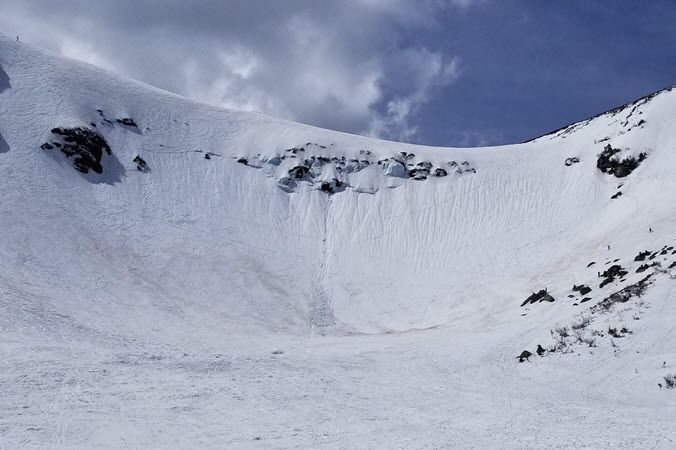
What Makes a Run Gnarly?
Several factors contribute to the difficulty of New England’s most epic, yet often intimidating, trails. These factors include steep pitch, moguls, narrow fall lines, and variable conditions, all contributing to the level of difficulty, attracting the die-hard adrenaline junkies. Some of the steepest runs in the Northeast approach 30 - 40 degrees in sections, rivaling expert terrain in western resorts.
New Hampshire's Hardest Ski Runs for Expert Shredders
Mount Washington - Tuckerman Ravine
With all due respect to the big, burly mountains out West, the Northeast has its fair share of double black runs that will tighten the sphincters of even the best skiers and boarders. Add fickle New England weather, the ultimate wild card that can transform a marginal run into a sheet of bone-chattering boilerplate, and a whole bunch of freshly cut glades, and New England offers enough outrageous terrain to satisfy most “extreme” appetites.
Starting with Tuckerman Ravine, on the eastern shoulder of Mount Washington, needs no introduction. While often mentioned alongside the toughest runs in New England, it’s important to note that Tuckerman is technically backcountry terrain rather than lift-served skiing. The Thunderbolt Ski Trail, named after the famous Revere Beach roller coaster, was carved into the side of Mount Greylock in 1934, and was one of the country's best-known racecourses in the 1930s and '40s. It drops more than 1,800 vertical feet in 1.6 miles, beginning just below the 3,491-foot summit of Mount Greylock, and ending at Thiel Farm in Adams. In short, the Thunderbolt is the stuff of legend. It was described in awestruck terms in a 1939 guidebook to eastern skiing as “one of the steepest and most difficult expert trails in the East.” Today, the Thunderbolt Trail is primarily used by backcountry skiers and for the annual Thunderbolt ski Race.
“This is a classic, and they started running the race there again,” says Connecticut's Jeff Hogan. “It just might be the steepest, turniest trail in New England.”
Since most conversations about “extreme skiing” in New England begin and end with Tuckerman Ravine, you've got to give New Hampshire full props. Another beauty, though, can be seen just to the east. Backcountry aficionado Krisztina Holly admits she didn't spend much time in bounds while living in the Northeast, but she has high praise for exposed runs under the old gondola line at Wildcat in Pinkham Notch, such as Top Cat and Lift Lion. Those trails, says Holly, “have the benefit of crazy weather at times to add to the gnarliness.”
Cannon - Front Four
Exposure is a major reason why you'll find Cannon's Front Four – Avalanche, Paulie's Folly, Zoomer, and Rocket – plus a few others at this famed Franconia ski area near the top of many visitor's lists of fiendish trails. “Coming of the Tram can be like you are walking on the moon or some uninhabitable place with the wind howling,” says Jim Reynolds of Massachusetts.
“The run over from Taft Race Course to Upper Hardscrabble and Cannonball under the upper chair can be life threatening in the right kind of 'freeze your face off' scratchy conditions.”
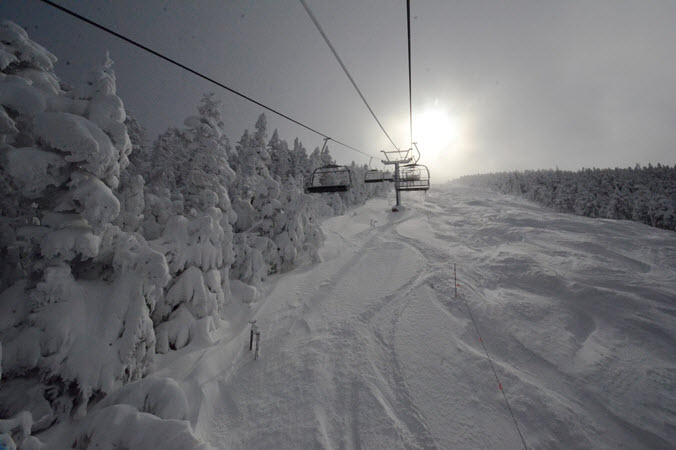
“Upper and Lower Hardscrabble at Cannon are tight, twisty, ungroomed,” says O'Connor. “Most of the time there was a frozen stream running across the trail where you could see rocks and dirt through two feet of clear blue ice while making a necessary left-hand turn. I always remember hoping there was snow on the other side so I could catch an edge and make the turn before slamming into the trees.”
Guidebook author and avowed powderhound Lafe Low admits to having a soft spot for Cannon's DJ's Tramline off the 4,060-foot summit. It wasn't built as a ski run, but as a service trail. And once you drop in, there's no bailing out. Translation? It requires full commitment. “It's rarely open, but when it is, it is some narrow, steep, rock-strewn skiing,” says Low. “And you have the tram audience critiquing your run.”
Of course, adjacent Mittersill has been an off-piste playground for the past quarter century, and should continue to offer up some terrific terrain now that a new double chair is up and running.
Maine's Steepest Ski Runs and Most Challenging Terrain
Despite Saddleback's welcomed purchase and anticipated revival, the top guns in Vacationland ski circles are still Sugarloaf and Sunday River, and that goes for the category of demanding ski runs as well.
Sugarloaf - Upper Bubblecuffer
“I'd propose Upper Bubblecuffer at Sugarloaf,” says free-heeler Paul Erhard of Massachusetts. “Starting from the snow fields, you have above tree line skiing that drops steeply into a narrow, winding, old school trail with crossing fall lines that provide a new look no matter how many times you ski it.”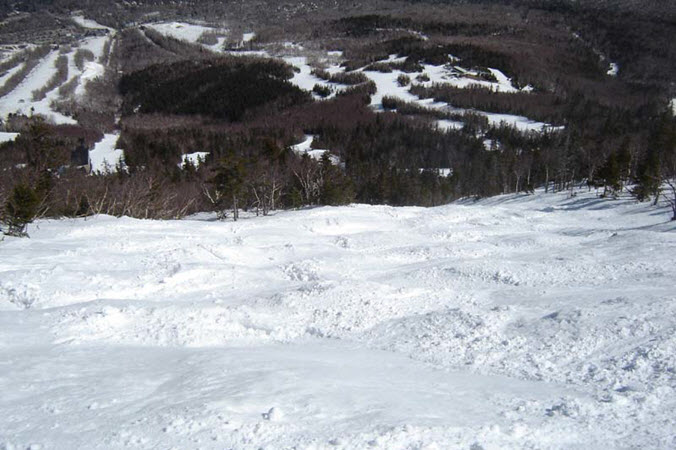
The compressed discs in my lower back won't disagree, but they also insist upon adding Upper Gondola Line, Upper Boomaguer, Wedge, and Misery Whip to Erhard's favorite. Massachusetts's Matt Plum, meanwhile, casts his vote for the wooded wonderland of Can't Dog Glade on Sugarloaf's eastern border, off the King Pine Quad, alongside the double black Ripsaw.
Sunday River - White Heat
At Sunday River, White Heat has been wowing freestyle skiers for decades, starting with Wayne Wong right through the current crop of mogul meisters. “White Heat is the trail if you likes bumps as big as Volkswagens and a lift-line audience,” says my brother, Michael O'Connor, who now rips his lines in Snowmass, CO. At the very least, I need to add Shock Wave on White Cap, Vortex on Aurora Peak, and Caramba on Jordan Peak as honorable mention candidates.
Massachusetts' Most Legendary and Challenging Ski Runs
Berkshire East - Beast Glades
Thunderbolt isn't the only tough trail in the Commonwealth. Berkshire East near Pittsfield, in western Massachusetts, boasts a 1,200-foot vertical from its 1,840-foot peak. First opened a half-century ago as Thunder Mountain, Berkshire East can certainly bring the noise. Simply put, it's all about the pitch. The Summit Triple Express services the best of Berkshire East, a series of steep double black (Tomahawk and Beast) and black diamond runs (Flying Cloud, Liftline, Jug, and Upper Competition) that will energize your fast-twitch muscles.
“The Beast Glades at Berkshire East are incredibly tight and steep, some of the toughest glades around,” says Jeremy Davis, founder of the New England Lost Ski Area Project (nelsap.org).
Vermont's Toughest Runs: Steepest Expert Terrain in the Green Mountains
Mad River Glen - Paradise
Saving the best for last, Vermont was the clear winner in our informal poll (after Tuckerman). When you think “gnarly” in the Green Mountain State, you've got to think Mad River Glen. This old school hill outside Waitsfield provides plenty of old school thrills and chills. Frequent visitor Che Elwell of Massachusetts is partial to Liftline, a “tight, straight-line run that's never groomed.”
“It's under the single chair, so in full sight of some of the best skiers around,” says Elwell, not the least bit self-conscious. “Oh, and can you say waterfall drop?”
“Mad River Glen has the best stuff, but I would propose Paradise over Lift line,” says Erhard. “It doesn't have the critical crowd factor, but the trees, double waterfall, steeper fall line, rock drops, and the knowledge that you could make or end your skiing history with every run makes this a top choice. On the right day it truly is paradise.” 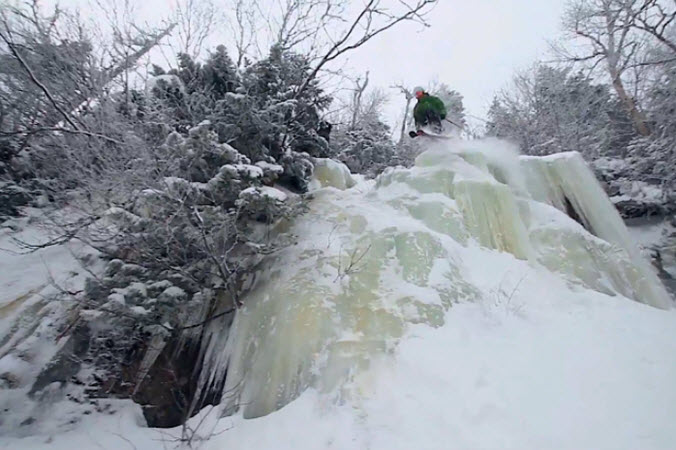
Paradise is also one of two New England ski runs to make CNN Travel’s “100 Best Ski Runs in the World” (Outer Limits at Killington – the longest, steepest mogul run in the eastern United States – was the other). Low concurs.
“Paradise at Mad River Glen is an absolutely amazing run; steeps, trees, huge bumps, waterfall jumps – one really big one,” he says. “You really don't want to fall here.”
Sugarbush - Castle Rock Peak
Nearby, at Sugarbush, Castlerock Peak has been named a fan favorite. Prior to taking on this killer terrain, beware that the Castlerock Double lift serves expert terrain only. Site of the annual Castlerock Extreme Challenge, the peak is also home to Rumble, which Elwell describes as “an old school ungroomed, tight, winding run, with a nasty boulder drop immediately followed by a 90-degree right-hand turn.” Lift Line drops beneath the experts-only Castlerock Double, which leads to only notoriously tough rips, two double-black diamonds, and two black diamonds. And if you fail to style this narrow, steep, rock-strewn run, you'll hear about it from above. Exterminator off adjacent Mount Ellen isn't too shabby either.
Stowe - Goat & Star
Of course, no list of rambunctious runs would be complete without Stowe. “Goat and Starr at Stowe are two of the gnarliest,” says Carolyn Beckedorff, the 2010 US masters national racing champ. “Starr because of its sheer steepness at the top, and Goat because of how narrow and steep it is. Both runs are famous for their giant moguls and, unfortunately, also some fabled New England ‘hardpack.'”
“The legendary Front Four at Stowe have always taught the brazen the meaning of respect,” says outdoor author Steve Jermanok. 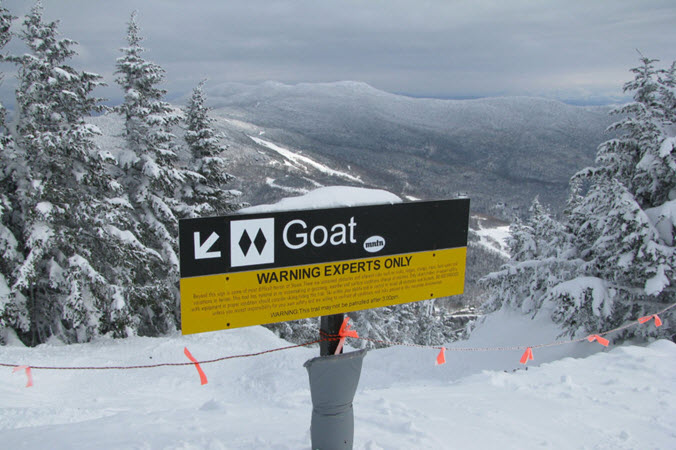
“All double diamonds, Starr has a 37-degree pitch, while Liftline and Goat are serpentine trails where you have to turn on a dime. But it's National that instills panic in most skiers as they look over the lip and quiver, ‘I think I'm gonna try something else.' Smart idea.”
Killington - Anarchy Glades
To the south of Stowe and Sugarbush, the “Beast of the East” is always willing to stand up and be counted when it comes to challenging terrain. Killington's Anarchy Glades “are tight, steep and full of terrific surprises,” says Erhard. Outer Limits and Vertigo, like White Heat at Sunday River, are among the reigning mogul runs on the East Coast.
Pico - Upper Giant Killer
Just west, at Pico, outdoor columnist Carey Kish cherishes the double black diamond Upper Giant Killer. “The trail map makes it look like a regular trail, but it ain't,” says Kish. “Accessed by the Summit Express Quad, I've witnessed many skiers track excitedly through the trees to the opening, peer down and say ‘No way!' Yep, its crazy steep, narrow, and usually rife with rocks, stumps and ledge drops. Perfect! No place for the faint of heart! Bump and grind your way down this beauty, and then run it out down the mountain on the blue cruisers for about 2,000 feet of very fine vertical fun.”
Mount Snow - Jaws "of Death"
Close to the Massachusetts border, Mount Snow serves up the Jaws of Death, a fave of ex-pat Jules Older, former editor of SkiPress USA. Actually, the run is now known simply as “Jaws,” no doubt at the insistence of the resort's legal eagles. Though sometimes overshadowed by Ripcord, Jaws has great history. It first opened in 1958 and was a marquee black diamond through the 1970s. Still is, in my book.
Smuggler's Notch - Upper Madonna & Black Hole
To the north is another standard-bearer in Jay Peak, and a surprise entry. “ Smugglers Notch, because of its family reputation, is often overlooked,” says Vermonter Peter Oliver, former East Coast editor for Skiing magazine.
“All the upper Madonna stuff – Freefall, Robin's, Liftline, Black Hole – is nasty.”
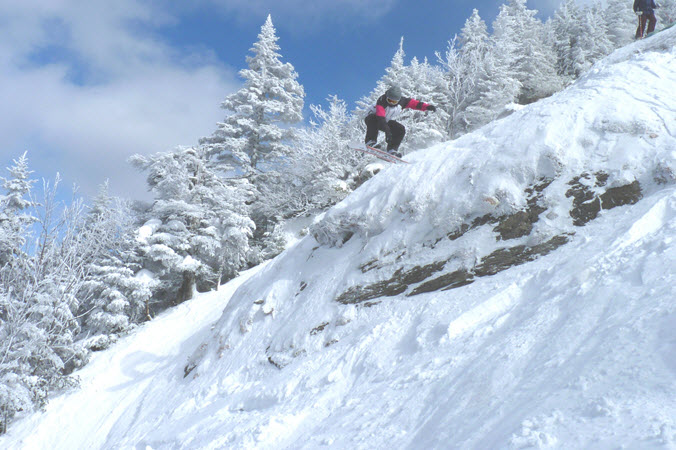
Next up at Smuggs, prepare yourself for the only triple black diamond in the Northeast. Black Hole, a classic glade, is incredibly steep and tight, with an average pitch of around 33 - 35 degrees. Like many challenging trails, this is most enjoyable after a dusting of fresh snow, making for an extremely memorable ride.
Jay Peak - Upper Everglades & Face Chutes
Closer to the Northeast Kingdom, underneath the Jay Cloud, Jay Peak is New England's unrivaled King of Snow, and it has the terrain to match. You have to love the fact that Jay's trail map doesn't even have “double” black diamonds. It's just a single black diamond; buyer beware. My pal Plum is partial to the mid-mountain Everglades that fall from Goat Run, while others set their sights on the upper mountain.
“The Face Chutes at Jay Peak have to be some of the best sustained, steep terrain so close to a lift,” says Erhard.
“Just riding up the tram, you wouldn't think people could or should ski right under the tram at the top, and you're right – but they do,” says Low. “This is one of the very few places that gives me that same feeling as skiing Tuckerman Ravine. If you fall, you're screwed.”
But you'll have the best tales to tell après ski, provided you're not recuperating at the First Aid station.
Tips for Skiing New England’s Steepest Trails
New England’s gnarliest runs reward confidence, strong technique, and a level of adaptability for varying mountain conditions. If you’re planning to tackle these legendary descents, a little preparation will certainly go a long way.
Start with Fresh Legs
Steep, mogul-filled trails require focus and endurance. So, if you’re planning to ski one of the region’s toughest runs, consider tackling it earlier in the day when your legs are still fresh and your concentration is at its peak.
Expect Variable Conditions
Unlike many resorts out west, New England terrain often changes drastically throughout the course of the day. A trail that starts with soft, powdery bumps can quickly change to firm and icy as temperatures decrease and skier traffic wipes away the fresh snow. Always keep your edges sharp and stay adaptable.
Study the Trail Before Dropping In
Many of these gnarly runs feature narrow entrances, rocky choke points, or steep headwalls. Therefore, be sure to take a moment to look down the fall line from the top, so you can select a route you’re comfortable with before committing to your first turn.
Keep Your Turns Controlled
On steep terrain, speed can build up in no time. So, focus on shorter, controlled turns and maintain a steady rhythm - especially when taking on mogul-heavy trails in Vermont’s steepest mountains, like Killington or Stowe.
Respect Natural Terrain
Some of New England’s most epic trails, especially at Mad River Glen, are left ungroomed to enhance a skier’s experience. This makes for natural obstacles such as rocks, roots, or small drops, requiring skiers to always approach these trails with caution and awareness.
Know When to Take a Break
There’s absolutely no shame in pulling to the side of a trail to regroup or plan ahead for the next leg of the run. The steepest runs in the Northeast reward patience just as much as technical skill.
Ultimately, for expert skiers, conquering New England’s gnarliest runs isn’t just about surviving the descent. Rather, it’s about embracing the challenge, history, and unique character of the region’s most legendary terrain.
Image Credits: Vermont Sports Magazine.
Recent Posts:
Vermont’s Ski Highway to Heaven.
Skiing New Hampshire’s Sweet 16.
Kantaja Double Roller Ski Bag Review.