An Insider's Guide to Zermatt: Skiing the Matterhorn, Dining, & Must-Know Experiences
Published by David Abramowitz
Kulkea Founder David Abramowitz Shares 14 Tips for an Unforgettable Zermatt Trip
Skiing in Europe is an entirely adventure-filled getaway, and it goes without saying that Zermatt is arguably the greatest, most beautiful ski town in the world.
THE MATTERHORN:
It’s doable. If its glaciers can be skied in August, the winter is a no-brainer. With smart planning in advance and cheap lift tickets by American standards, it's affordable. Yes, inexpensive lift tickets to stay in one country and ski amazing terrain into another for lunch. Just don’t miss the last lift back. Oh, and those European lift systems!
The Matterhorn means staying in Cervinia, Italy, or Zermatt, Switzerland. Two great choices. It simply depends on your preference. If you want the more affordable, and Italy, then it’s Cervinia.
We chose Zermatt. Why? Zermatt is, well, Zermatt. The one and only.
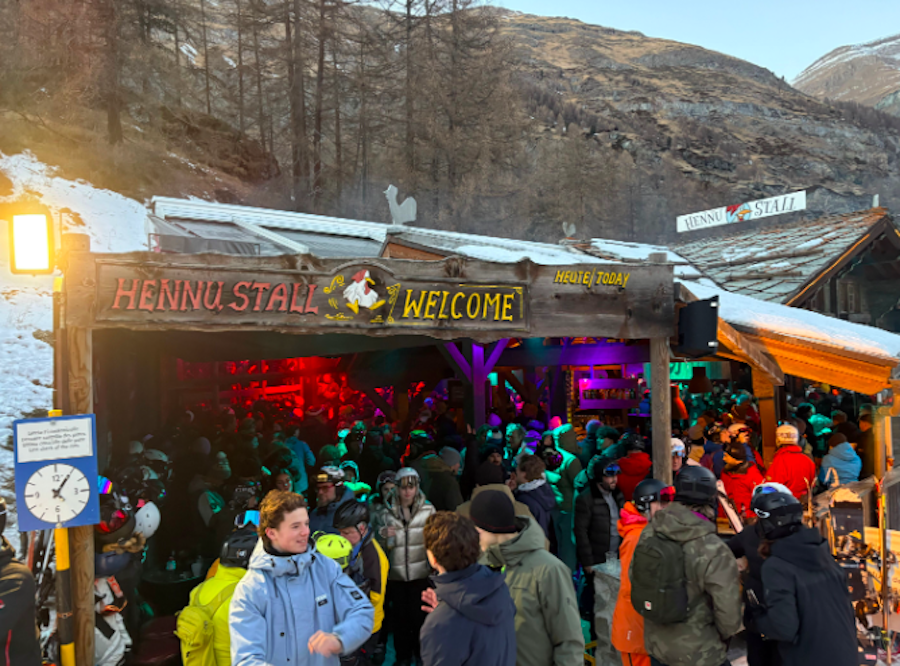
A former farming village surrounded by the Alps, Zermatt oozes authenticity with cobblestone streets, old farmhouses, and small shops. Pedestrians, miniature electric taxi vans, and bicycles share tiny roads more appropriately sized for herding animals. “Share” is a stretch, but somehow it works, including for the ski patrollers riding bikes to work, skis and all.
Dining is to Zermatt what sand is to the beach - you can’t forget experiencing the cultural differences from the apres to the food to the architecture. From traditional to high-end to affordable, Zermatt has it all. Places like The Stockhorn Grill breathe Swiss tradition. Envision barbecue in an open fireplace as you enter. I also recommend Chez Max Julen for another authentic Swiss BBQ meal.
Not a meat lover, opt for the Swiss fondue. Plus, on-mountain lunch at the Michelin-rated Chez Vrony is an incredible meal and value. We could list dozens of great restaurants, but the takeaway is that when it comes to dining in Zermatt, there is something for everyone. If you want to do it more affordably, do like the Europeans; make meals in your rental apartment.
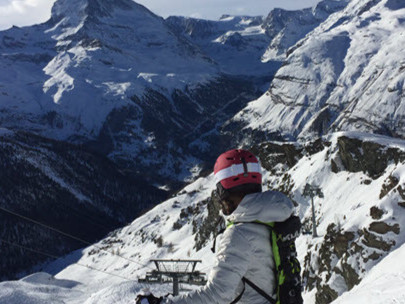
Let’s not forget why we came - the skiing. It’s European fantastic! The day starts with the morning sun on the Swiss side of The Matterhorn. It’s an incredible view as you head to the lift. Lift? That’s an understatement.
The hills in Zermatt are accessed via modernistic trains, trams, or gondolas. Think 21st-century futuristic engineering. Think heated seats. Think no long lines even during the December holiday break.
And, the skiing is pure joy. Whether you’re a beginner or expert, Zermatt is for you. Whether it’s on or off-piste, Zermatt has it and more.
It was in Zermatt that I learned to fully appreciate European skis. I love the mind-bending long runs in the Alps, skiing just about anywhere on the hill I want, with little roped off. The trails are long, wide, and perfectly groomed for curving at high speeds. In Zermatt, it’s like an art. So much so that for the first time, I was loving the groomers rather than constantly thinking about where to go off-trail.
But let’s not ignore off-piste. It’s European great if you see it, you can ski it. Practically nothing is roped off. Be smart and have a blast.
If that’s not enough, connect up with a guide in the backcountry. Need more? Book a Heli-ski trip. It’s all there in Zermatt.
Need a day off? Check out the village. Grab a cup of cappuccino and chocolate at a local cafe. Hit the spa. Dine out for lunch. Pop in for a drink at the Hexenbar. You’ll know you’re in Zermatt for sure.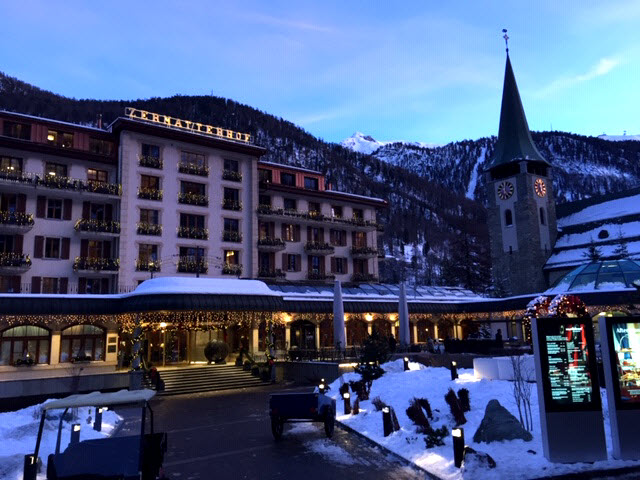
Not one to rest on your off-day? Zermatt has two outdoor skating rinks, or rent a toboggan at the Gornegrat and experience real sledding. Just don’t forget to bring your helmet and ski clothing. If screaming and crashing down a toboggan run isn’t thrilling enough, try paragliding? Yes, Zermatt has that too!
And, if you stay through New Year’s Eve, you’re in for a real treat. The village empties into the streets for a gathering stemming out from the church Pfarrkirche St. Mauritius. The town is then bombarded by fireworks from every direction in the Alps and downtown for what feels like forever.
So what’s it cost? That’s up to you. Whether you’re going high-end luxury or doing it on a reasonable budget, check out the tips below and have a terrific adventure.
1. Lift Tickets – Zermatt is one of the most expensive ski tickets in Europe, but it’s still way, way less than top resorts in the U.S. A daily price of around 109 Francs for a lift ticket, but often, people buy multi-day passes or buy through their hotels, bringing that cost down significantly. The biggest news, though, is that Zermatt is now on the IKON pass, allowing riders up to 5 or 7 days at Zermatt, depending on their pass.
2. No Car Rentals. Don’t bother renting a car – Cars are not permitted in Zermatt. The slopes and most locations can be reached easily by walking or a quick taxi ride. It’s super easy to boot up at the hotel and take a taxi to the lift. It’s almost as good as ski on ski-off.
3. Airports – Zurich and Geneva are the most common airports for accessing Zermatt. We went through Geneva, which was hassle-free. Milan is an option, too.
4. Going from the Airport to Zermatt – Zermatt is accessed via train or pre-booked shuttle. Train schedules can be found online. We opted for a pre-booked shuttle since we had a family of five. Check online, and you’ll see several viable pre-book shuttle services.
5. Book flights in Advance – Book early and save money, but ensure to scrutinize the baggage check details (see below).
6. Scrutinize Baggage Details – If you presume free baggage check because it’s an international flight you’ll likely be wrong. The baggage checking stinginess has hit international flights. So, read the fine print and make sure checking a bag is included.
7. Book Direct – There are benefits to booking directly with your airline. You’ll be able to choose your seat ahead of time and avoid any hidden surprises relating to checked baggage and carry-on baggage limitations.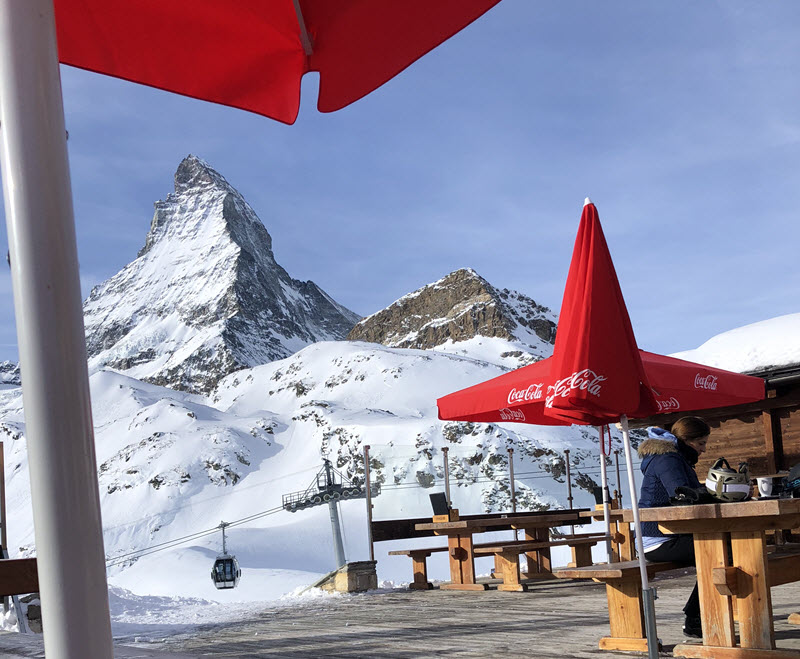
8. Bring Your Boots – As always with flying, bring your ski boots as carry-on luggage, because luggage often gets lost on international flights. I bring boots and necessities (e.g. ski pants, layers, gloves, helmet, goggles, and more) in a Käydä or Kartta carry-on backpack.
9. Watch Out for Airline Ski Fees – Unlike in the U.S., where skis often fly free or inexpensively, some of the carriers classify skis as oversized and charge exorbitant rates to bring skis overseas. So, do your homework and check the fees. Better yet, we recommend leaving your skis and poles at home and renting unless you have an incredible pair of skis. If you bring your skis, be sure to pack them securely in a padded and durable ski bag that can withstand the rigors of air, train, or shuttle travel.
10. Rent Your Skis – Renting skis and poles in Europe is much easier and less expensive (approx. $45-65 per day) than in the U.S. It makes the whole idea of flying to ski so much more doable. We used Slalom Sports - They have it down because they’re used to catering to renters coming from places like England and The Netherlands. Usually, you book ahead of time online and pick them up the afternoon before your first ski day, and getting onto the slopes will be a breeze.
11. Ski School – There are several affordable ski schools with English-speaking instructors. Most of the group lessons are small in size and perfect for most children. Typically, lessons start at one of the lifts, and children are expected to arrive booted up and ready to go. We used European Snowsport Zermatt, which worked great for us. 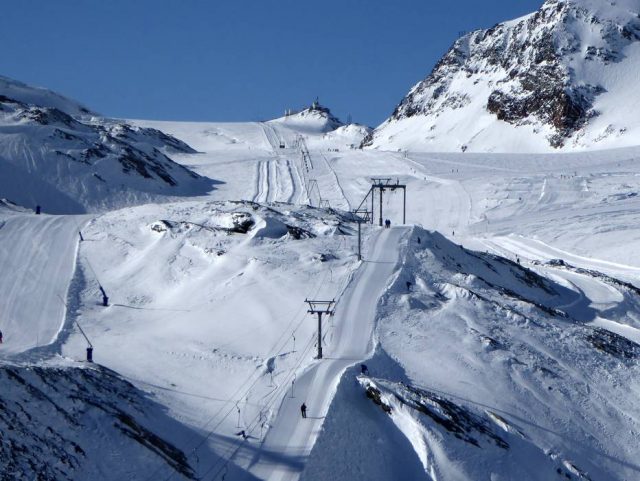
12. Small Day Backpack – Unlike in the U.S., many Europeans ski with a small and lightweight backpack. It’s no different in Zermatt. You’ll need to be self-sufficient and prepared for your adventurous day on the mountain. This need was a big influence on why and how we designed our Micro Pack. Since European skiing isn’t out of a lodge (the village is your lodge) and the resort size is huge, a pack like this allows skiers the flexibility to change layering or gear if conditions change, as well as to save money by carrying lunch, snacks, and water bottles.
13. Accommodations – Whether it’s luxury or reasonably affordable, there are countless choices available online. To avoid breaking the bank and getting a real Swiss feel, we suggest looking at the plethora of moderately priced, smaller family-run hotels. If you have a family in town and its affordability you want, then do like the Europeans and rent an apartment. It saves on the accommodation and cooking in will save you a bundle. When checking online, you’ll come across hotels in Zermatt that have apartment options. Renting apartments is extremely common in Zermatt. A great hotel with an apartment option is the Basecamp Hotel, run by the Lehner family. It’s clean, comfortable, and perfect for skiers, including a wonderfully helpful staff, ski lockers, boot heaters, and a warm breakfast. Right next door is an apartment complex owned by the Lehners. Additionally, The Rex is great and in a beautiful part of the town.
14. Swiss Francs vs. Credit Cards – Bring Swiss Francs and a credit card. They take credit cards nearly everywhere, but you’ll need some cash for taxis and small purchases.